 Hoya Habit
Care guide
Hoya callistophylla
Also called Beautiful-leaved hoya, Callistophylla. Family Apocynaceae.
At a glance
- Light
- Bright, indirect light; copes with medium light and some direct sun.
- Water
- When the mix is almost dry all the way down. Check the soil first.
- Soil
- A chunky, airy, bark-led mix that drains in seconds: equal parts orchid bark, peat-free compost and coarse perlite.
- Pot
- A drainage hole is a must; likes to be snug; go up 2 to 5 cm at a time.
- Temperature
- 18 to 27 C; not below 16 C.
- Humidity
- 50 to 60%; ordinary room air is fine.
- Feeding
- Half strength every 4 to 6 weeks in the growing season, none in the rest months.
- Repotting
- Every 2 to 3 years, in spring.
- Rest
- Late autumn to late winter: cooler, drier, unfed.
- Flowers
- Intermittent, whenever a mature plant is warm and settled, most often in the warm months, on a settled plant in good light.
- Pets and people
- Cats not listed, dogs not listed, people mildly irritating.
- Difficulty
- Moderate.
Before you waterPush a dry finger as far into the mix as it will go and lift the pot. Dry most of the way down and light means water; any dampness near the roots means wait. Leaves that have gone limp and lost their firmness are the plant's own signal.
Meet the plant
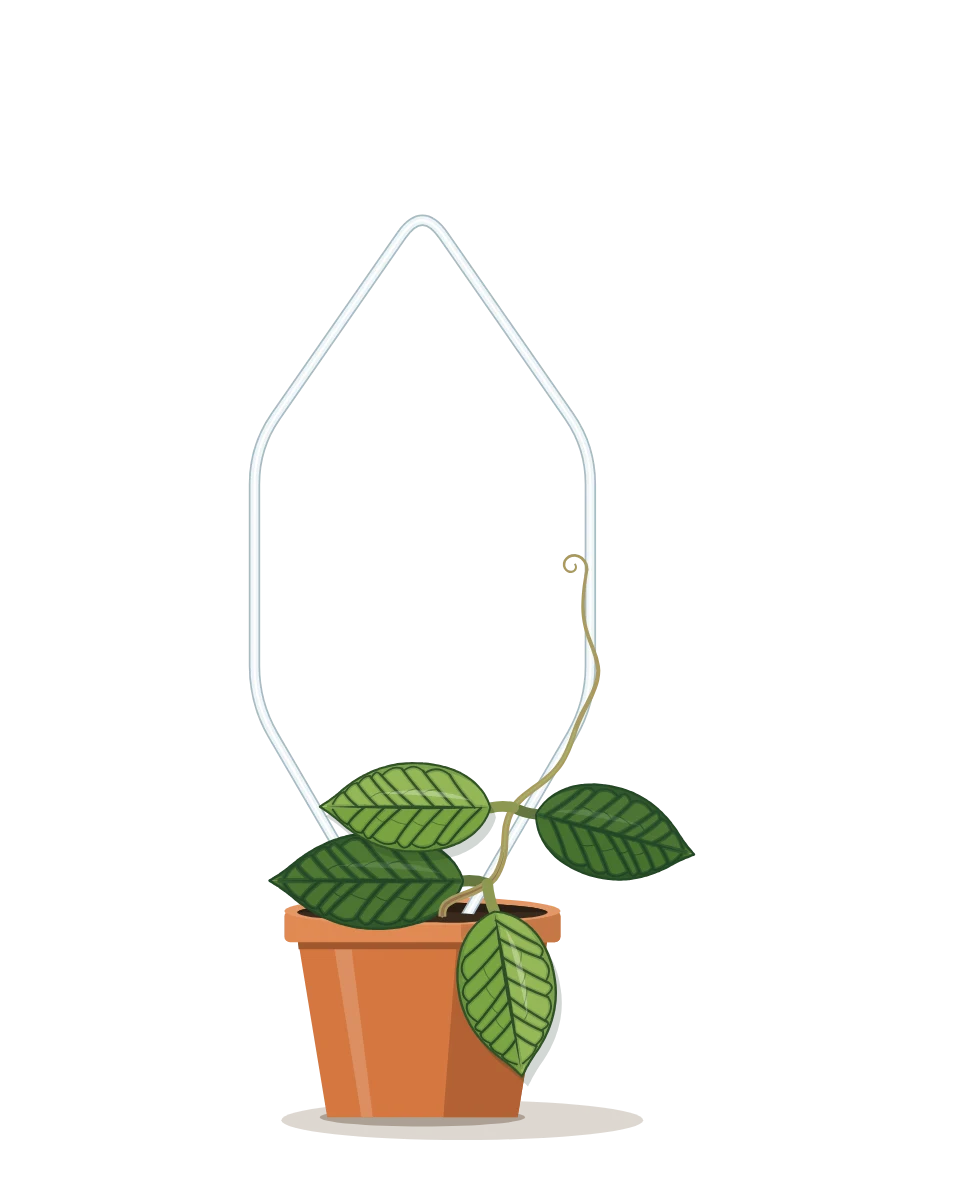
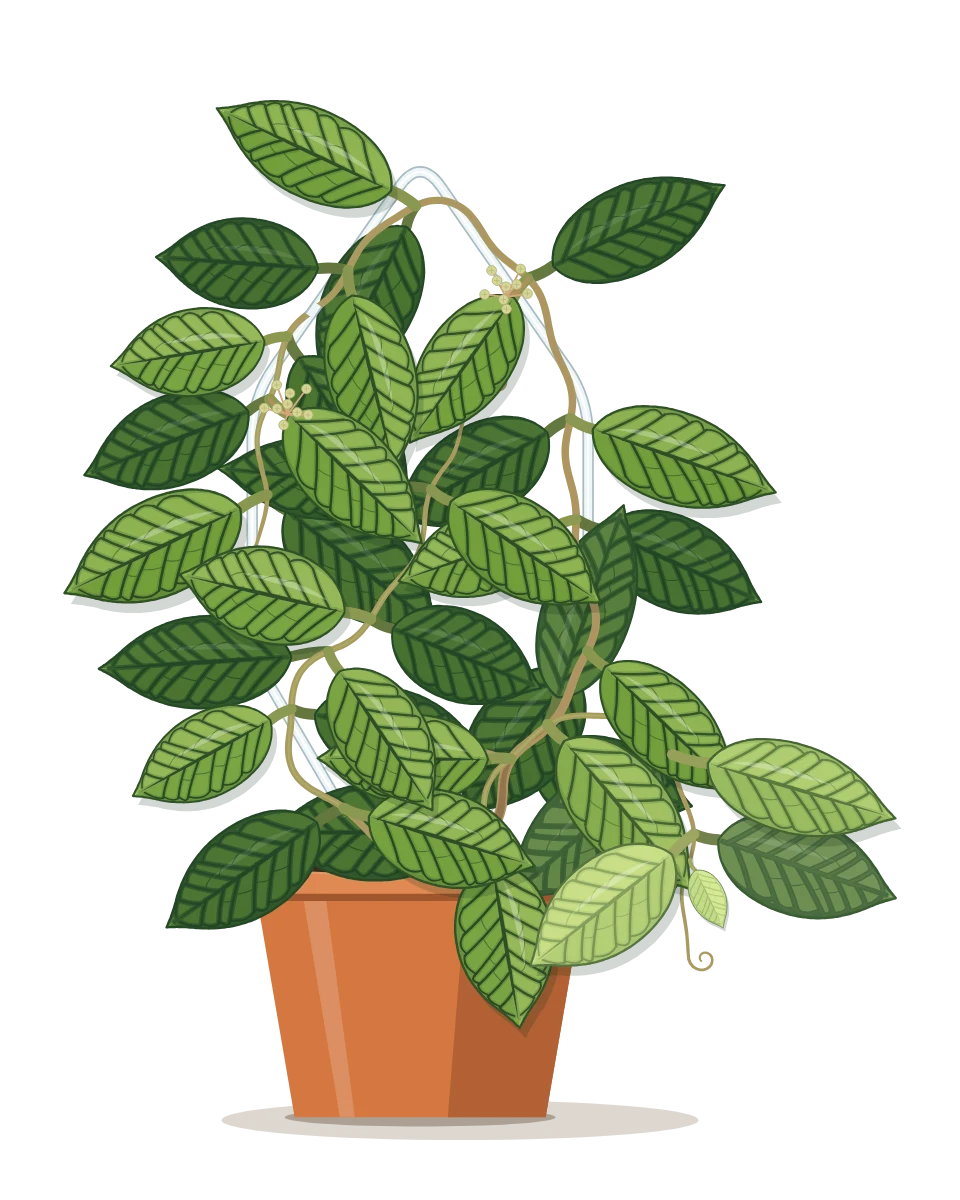
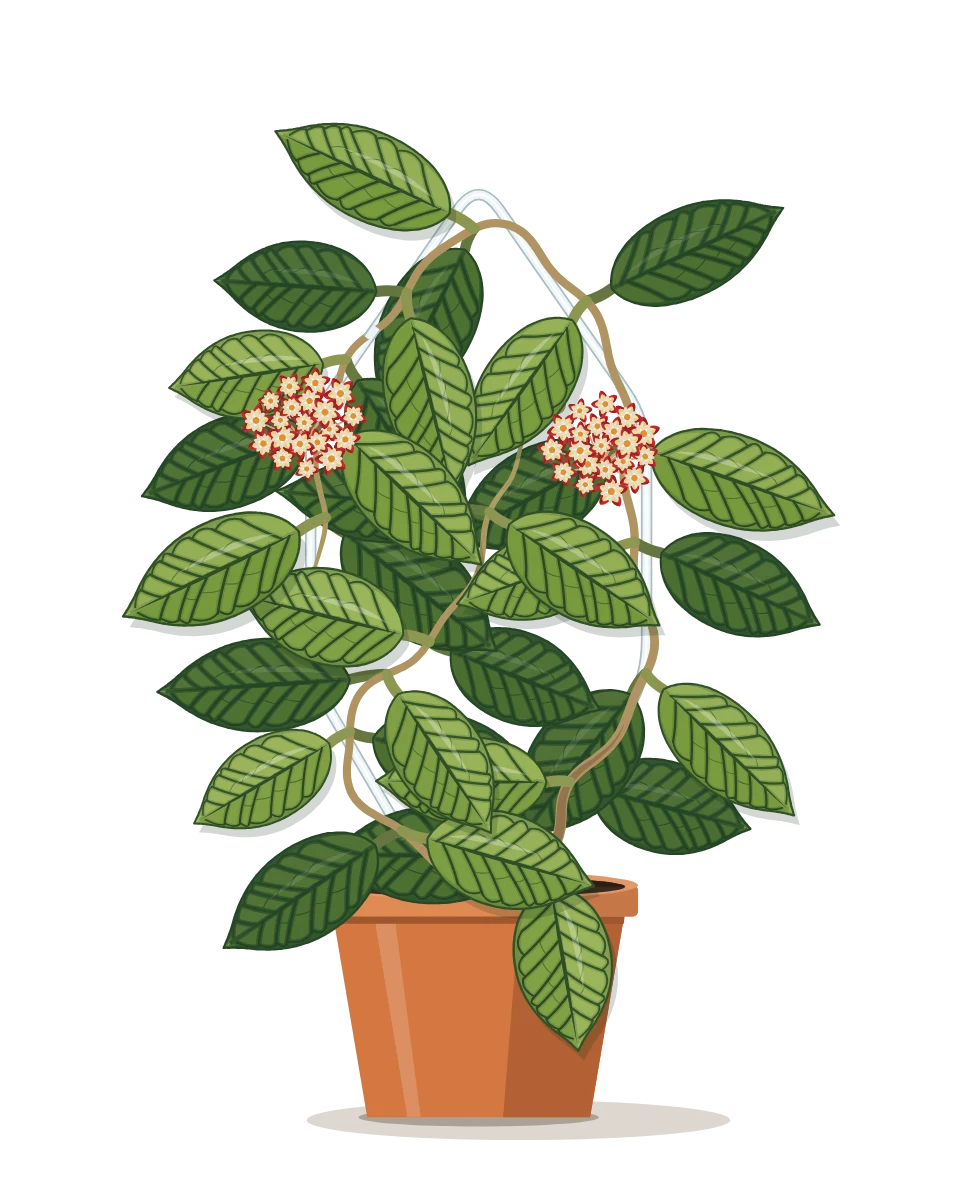
A climbing hoya grown for its leaves: large, elliptic, green blades boldly netted with dark veins, thick and firm to the touch, up to 25 cm long on a grown plant (NParks, Logee's). New leaves open a paler green with the veins barely showing and darken as they harden (Foliage Factory). It comes from Borneo, where it climbs in dipterocarp hill forest and heath forest at 300 to 600 m, sometimes to 1,000 m, as a terrestrial to epiphytic vine up to 5 m long (NParks, EPPO). The name means beautiful-leaved, and hoya growers file it under foliage hoyas rather than flowering ones (Pistils Nursery).
It is a plant of warm, humid, shaded forest, and that is what it asks for indoors: filtered light, warmth, air that is not bone dry, and a chunky mix that drains. The leaves are thinner than a wax plant's and hold less water, so it is less forgiving of weeks forgotten than a carnosa, and just as unforgiving of a pot that stays wet. Growers call it tough once it is settled (Vermont Hoyas, callistophylla); nurseries call it an easy grower in good light (Logee's) and rate its upkeep moderate (Proven Winners). This guide says moderate: the care is ordinary hoya care, but the plant wants more warmth and humidity than a wax plant and is slow to get going.
You will usually buy it as a rooted cutting of two or three nodes in a small pot (Logee's). What to expect in the first year: not much, and then something. It is a slow grower (By Brittany Goldwyn, Foliage Factory), and a young cutting spends its first months making roots before it makes leaves. A bare tip reaches out first and leafs up later; give it a hoop or small trellis to wind onto from the start (Logee's, Proven Winners). Once rooted and warm it grows steadily, a pair of leaves at a time. Flowers are years away, if they come at all.
The ASPCA has no entry for this species. It lists the related wax plant as non-toxic to cats and dogs (ASPCA), and two nurseries call this one pet safe (Logee's, Foliage Factory), while one botanical database lists it as toxic if eaten and says to keep it from children and pets (NParks). Until that is settled, treat it as best not chewed. The milky sap can irritate skin, so wear gloves when you cut (RHS growing guide).
Light
Bright, filtered light: close to an east or west window, or a little back from a south one with a sheer curtain, with no hot sun on the leaves (Logee's, Proven Winners). Foliage Factory puts that at roughly 10,000 to 20,000 lux at the leaf (Foliage Factory). It is more shade-tolerant than most hoyas: NParks grows it in semi-shade, Logee's finds a cool north windowsill enough, and one long-time grower says it likes it shady (NParks, Vermont Hoyas, callistophylla). Dimmer spots slow it and dull the colours, though (Proven Winners). For the genus, Clemson and Iowa State both say one of your brightest windows, introduced gradually (Clemson HGIC, Iowa State Extension).
A few hours of gentle morning or evening sun give the leaves a pinkish blush, which is harmless and fades; hot direct sun bleaches and scorches them, and scorched patches do not recover (Proven Winners, Foliage Factory). Move it toward stronger light over a couple of weeks, as you would tan (Pistils Nursery). Too little light shows as smaller, paler leaves, long thin bare runners, and no flowers; light is the first thing to change when any hoya will not bloom (Iowa State Extension, UF/IFAS Gardening Solutions).
Water
Check first. Push a dry finger as far into the mix as it will go, and lift the pot: learn what it weighs wet and dry (Vermont Hoyas, watering, Clemson HGIC). Dry most of the way down and light means it is time. Damp near the roots means wait. The leaves help too: firm and glossy means fine, limp and soft means thirsty, and because they are thinner than a wax plant's they show it sooner.
The rule: water thoroughly, until it runs out of the bottom, once the deeper mix is mostly dry, then let it dry again (Foliage Factory, Iowa State Extension). Do not water in sips (Vermont Hoyas, watering). Use room-temperature water. Sources differ on how dry is dry, and this is the one place they pull in opposite directions: Logee's waters when the top of the mix is dry to the touch and Proven Winners when the top few centimetres are, Foliage Factory waits until 60 to 80 percent of the mix is dry, one grower lets it dry out completely (Logee's, Proven Winners, Foliage Factory, By Brittany Goldwyn), and Vermont Hoyas says it likes it damp and lists it among the hoyas that grow wet in the wild (Vermont Hoyas, callistophylla, Vermont Hoyas, in the wild). This guide takes the drier side, mostly dry before the next drink, because overwatering in a heavy mix is the quickest path to root decline for any hoya (Iowa State Extension); but it does not say bone dry for weeks, because these leaves hold less than a carnosa's.
Thirsty: leaves limp, soft and hanging lower, on a dry light pot; a soak brings them back over a day or two. Left dry much longer, the lowest leaves yellow with the veins staying green longest, then brown and fall. Overwatered: leaves yellowing or dropping while the mix is still wet, or limp leaves on wet mix, which means the roots are damaged and can no longer drink (Iowa State Extension, Foliage Factory). If the leaves say thirsty and the soil says wet, believe the soil and look at the roots.
How often that lands depends on the pot, the mix, the light and the room. In a chunky mix in a warm bright spot in summer it often comes round every week or so, and in winter roughly every ten days to three weeks; one grower checks weekly in spring and summer and every 10 to 14 days in autumn and winter, and Vermont Hoyas finds most hoyas need nothing more often than every six days (By Brittany Goldwyn, Vermont Hoyas, watering). In winter the plant stands still and wants much less (UF/IFAS Gardening Solutions), though a pot near a radiator in dry heated air can dry faster than you expect (Vermont Hoyas, watering). It is easier to overwater when it is cool, so in a cool room err dry. Treat the numbers as a reminder to check, not as the instruction.
Soil and pot
A chunky, fast-draining, bark-led mix, because this is a climber of tree trunks and its roots want air: equal parts orchid bark, peat-free compost and coarse perlite (RHS growing guide, Clemson HGIC). Foliage Factory grows this species in a medium-chunky bark mix with a light moisture buffer (Foliage Factory); hoya growers go chunkier still, mostly perlite and bark with a little compost and a handful of charcoal (Vermont Hoyas, medium). Ordinary potting soil on its own stays wet too long. Mixes break down over two or three years into fine material that holds water, so refresh the mix on that rhythm even if the pot stays the same (Vermont Hoyas, medium).
The pot needs a drainage hole and should be snug; a pot too large keeps the mix wet around roots that cannot use it, and hoyas flower better slightly pot-bound (Iowa State Extension, Clemson HGIC). When roots fill the pot or grow out of the holes, go up one size only, 2 to 5 cm wider (Vermont Hoyas, repotting, By Brittany Goldwyn). Growers disagree on material: Vermont Hoyas prefers plastic or glazed pots because bare terracotta dries a chunky mix so fast it kills the fine outer roots, and plastic lets you judge the weight; Pistils likes unglazed terracotta for the airflow (Vermont Hoyas, repotting, Pistils Nursery). Either works if you check before you water. Stand a hoop or small trellis in the pot early; the vine climbs more readily than it trails, and climbing growth carries bigger leaves (Foliage Factory).
Repot in spring, never while in bud, and only when the roots have filled the pot or the mix has gone fine and soggy (RHS growing guide, Iowa State Extension). Water it in once so the fresh mix settles around the roots, then do not water again until the new mix has almost dried out; the two months after a repot are when overwatering does the most harm (Vermont Hoyas, repotting). Hold the feed for five or six weeks (RHS growing guide).
Feeding
Lightly, and only while it is growing. A balanced liquid houseplant or orchid feed at half strength every four to six weeks from spring to early autumn, while new leaves are forming (Proven Winners, Iowa State Extension). Foliage Factory feeds this species at a quarter to half strength and stops whenever growth stops (Foliage Factory); Proven Winners says skip it when no new leaves are coming, which for a slow starter can mean most of the first year. Sources disagree about winter: the RHS keeps a monthly feed going through autumn and winter and feeds fortnightly in summer (RHS growing guide), while Iowa State and the nurseries stop (Iowa State Extension). This guide stops, and takes the weaker end. Every few months water through with plain water to wash out salts (RHS growing guide). Nothing for five or six weeks after repotting.
Flowering
Do not count on it. One grower who has kept this species for years has never flowered it (Vermont Hoyas, callistophylla), and a nursery that sells it calls blooms uncommon (Proven Winners). When a mature plant does flower, it makes round clusters of 20 to 40 small waxy stars, 8 to 10 mm across, pale yellow to cream tipped reddish brown with a white corona, mildly scented, each flower lasting about a day (NParks, Foliage Factory). Logee's describes them as white and subtly fragrant and the bloom as intermittent rather than seasonal (Logee's); on a windowsill they are most likely in the warm months.
What it takes is general hoya advice: a mature plant with long vines, bright filtered light, warmth, a snug pot, and being left in one place (Iowa State Extension, Clemson HGIC). Two things never to do. The flowers grow from short spurs that bloom again year after year; when the flowers fall, leave the spur alone, because cutting it off is cutting off future flowers (Proven Winners, UF/IFAS Gardening Solutions). Let spent flowers drop by themselves. And once buds appear, do not move, turn or change the watering until the flowers are over; a moved plant drops its buds (Iowa State Extension, RHS growing guide).
When something looks wrong
Look at the soil first, then at the warmth and light. Most of what follows is general hoya advice applied to a plant with thinner leaves.
- Limp, soft or drooping leaves. Check the mix. Dry and light: soak it through, and the leaves firm up over a day or two. Wet: the roots are damaged; let it dry almost completely and slide it out to look (Iowa State Extension, Foliage Factory). Sips that wet only the surface do the same as not watering (Vermont Hoyas, watering).
- Yellow leaves on wet mix. Overwatering, a pot too large, or a mix that has broken down. Stop until nearly dry, check that water runs freely out, and repot into fresh airy mix in a snug pot if the mix is compacted (Iowa State Extension, Foliage Factory).
- Lowest leaves yellowing, veins still green, then browning and falling on bone-dry mix. Left dry too long. Soak it through, water a little sooner from now on, and raise the humidity. Leave the bare nodes; they leaf again under steady care.
- No new growth for months. Often nothing is wrong: a cutting roots before it leafs, winter stops this species, and a cool room slows it (Vermont Hoyas, callistophylla, By Brittany Goldwyn). More light, warmth above 18 C and a fresh mix are what speed it up; poor growth in any hoya is usually light, cold or an old compacted mix (Iowa State Extension).
- A new cutting wilts and dies after potting. One buyer lost two of four rooted cuttings on potting up (Proven Winners). Root cuttings fully in perlite or sphagnum before they go into mix, keep that mix barely moist until new growth shows, and keep a new plant warm and out of draughts for its first weeks (Vermont Hoyas, propagation).
- No flowers. Youth, light, warmth, cut spurs, moving, in that order; and this species flowers rarely even when all is well (Vermont Hoyas, callistophylla, Iowa State Extension).
- Buds drop before opening. The plant was moved, the watering changed, or the temperature swung (Iowa State Extension, RHS growing guide). Leave it where it is and keep the rhythm steady until it has finished.
- Pink leaves, or bleached and scorched. A pink blush in bright light is harmless and fades. White or brown crisp patches are sunburn and stay: move it back or filter the light, and introduce stronger light over a couple of weeks (Proven Winners, Foliage Factory).
- Small pale leaves and long thin bare vines. Too little light, or simply a runner reaching out before it leafs. Move it closer to the window, wind the runner onto the hoop, and do not cut it off (Proven Winners, Pistils Nursery).
- Dark spreading spots on wet leaves. Foliage left wet without airflow, or waterlogged mix, or winter cold (Foliage Factory, RHS growing guide). Water the mix not the leaves, let air move, remove the worst leaves, check the roots, keep it warmer.
- Mealybugs. White cottony tufts in the leaf joints: the hoya's most common pest (Clemson HGIC, UF/IFAS Gardening Solutions). Dab each one with a cotton bud in rubbing alcohol, wash with insecticidal soap, repeat weekly for several weeks, and keep the plant apart until clear.
- Spider mites. Pale speckling and fine webbing in dry warm air, often by winter heating (Clemson HGIC, Foliage Factory). Shower the plant, undersides included, every few days, spray with insecticidal soap or neem weekly, and raise the humidity.
- Scale. Small hard brown bumps with sticky residue (Iowa State Extension). Wipe or scrape them off, then wipe with insecticidal soap or horticultural oil and repeat.
- Black mushy base, wilting on wet mix. Root rot. Cut away every dark soft root, repot in fresh dry mix in a snug pot, water only when nearly dry, and take cuttings of healthy vine straight away: a plant this far gone often does not recover (RHS growing guide, Clemson HGIC).
Propagation
By stem cuttings, in spring or early summer, when the plant is warm and growing (NParks). Take a piece of mature but not woody vine with two or more nodes and a couple of leaves, and remove the lowest leaves; a leaf on its own may root but will never make a vine (Iowa State Extension, Vermont Hoyas, propagation). Wear gloves for the sap. Push it into moist perlite up to the first leaves, cover it to keep the air humid, and keep it warm in bright indirect light; roots usually come in four to six weeks (Vermont Hoyas, propagation). Foliage Factory roots a two-node cutting in water with the lower node under the surface (Foliage Factory), and one grower prefers damp sphagnum and perlite and finds this species can take several months to root, with water-rooted cuttings struggling when moved to mix (By Brittany Goldwyn). Pot the rooted cutting into the chunky mix in a small pot, give it the same light and the same dry spells as its parent, and expect it to sit for a while before it grows. A vine can also be layered: pin a length of stem to a pot of mix beside the plant and cut it free once it has rooted (RHS growing guide).
Grow one for a habit
In Hoya Habit, every habit you keep grows a plant of its own. Check in and it leafs out; let it slide and the plant shows it. Give one of your habits a Hoya callistophylla.
Sources
- NParks Flora and Fauna Web, Hoya callistophylla, read 2026-10-21
- EPPO Global Database, Hoya callistophylla (HOYCL), read 2026-10-21
- Vermont Hoyas, Hoya callistophylla, read 2026-10-21
- Vermont Hoyas, Hoya conditions in the wild, read 2026-10-21
- Vermont Hoyas, Watering and fertilization, read 2026-10-21
- Vermont Hoyas, Potting medium, read 2026-10-21
- Vermont Hoyas, Potting up or re-potting your Hoya, read 2026-10-21
- Vermont Hoyas, Propagation, read 2026-10-21
- Iowa State University Extension, All About Hoyas, read 2026-10-21
- Clemson HGIC 1460, Indoor Plants, Waxflowers (Hoya), read 2026-10-21
- UF/IFAS Gardening Solutions, Hoya, read 2026-10-21
- RHS, Hoya growing guide, read 2026-10-21
- ASPCA, Honey Plant (Hoya carnosa), read 2026-10-21
- Logee's, Hoya callistophylla, read 2026-10-21
- Foliage Factory, Hoya callistophylla, read 2026-10-21
- Proven Winners, Endless Cascades Shadow Falls (Hoya callistophylla), read 2026-10-21
- By Brittany Goldwyn, Hoya callistophylla care, read 2026-10-21
- Pistils Nursery, Hoya plant care, read 2026-10-21