 Hoya Habit
Care guide
Silver pink vine (Hoya pubicalyx)
Also called Silver pink vine, Pink silver, Wax plant, Porcelain flower. Family Apocynaceae.
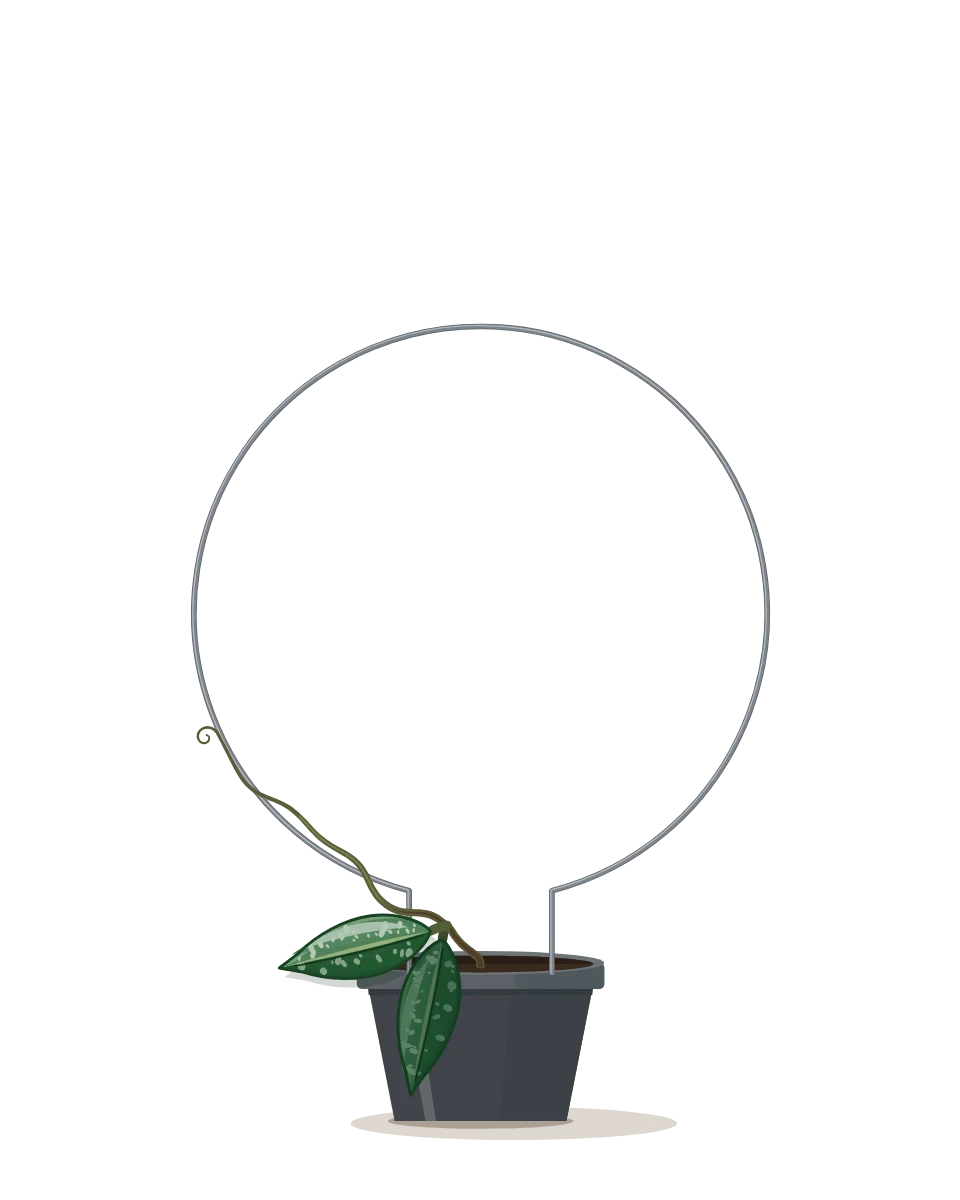
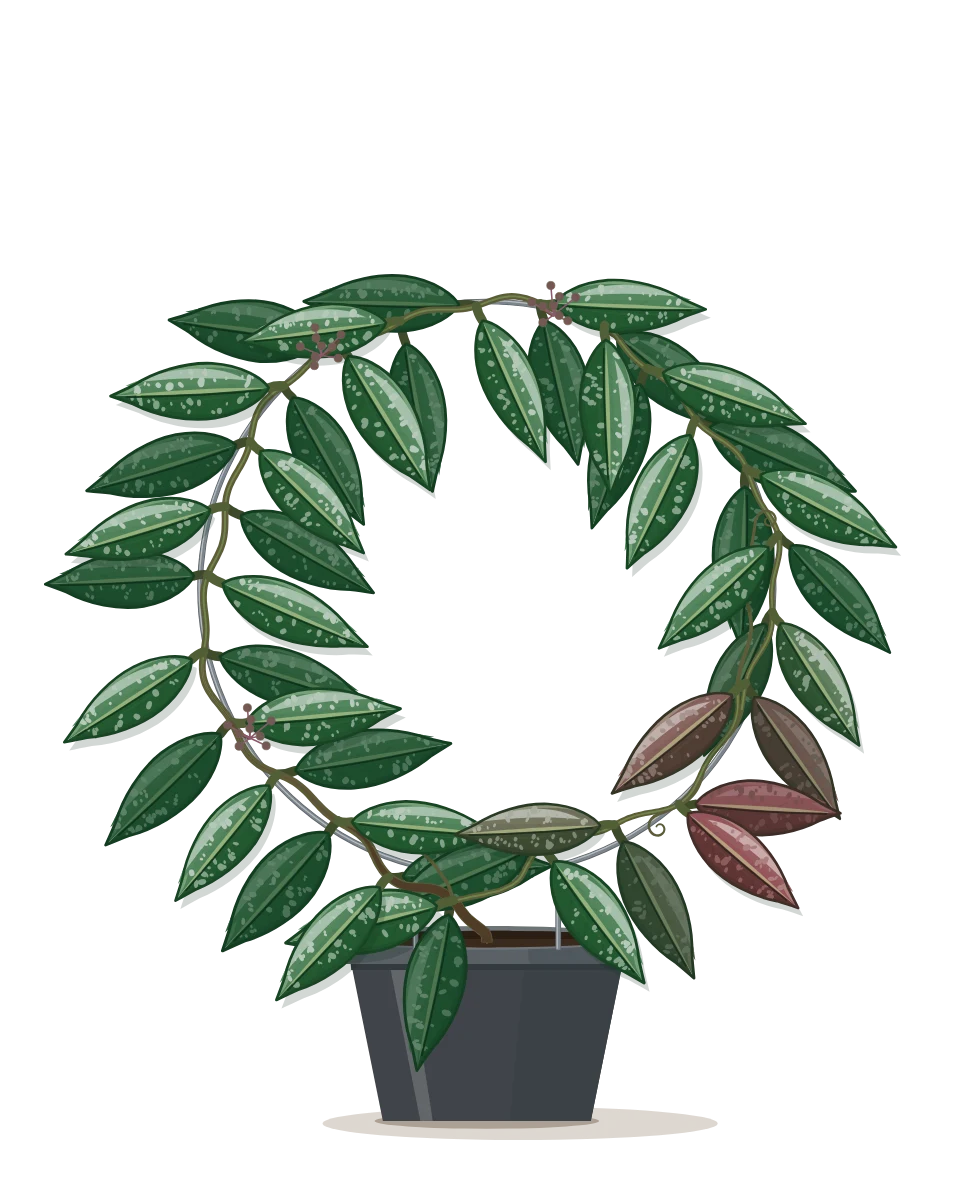
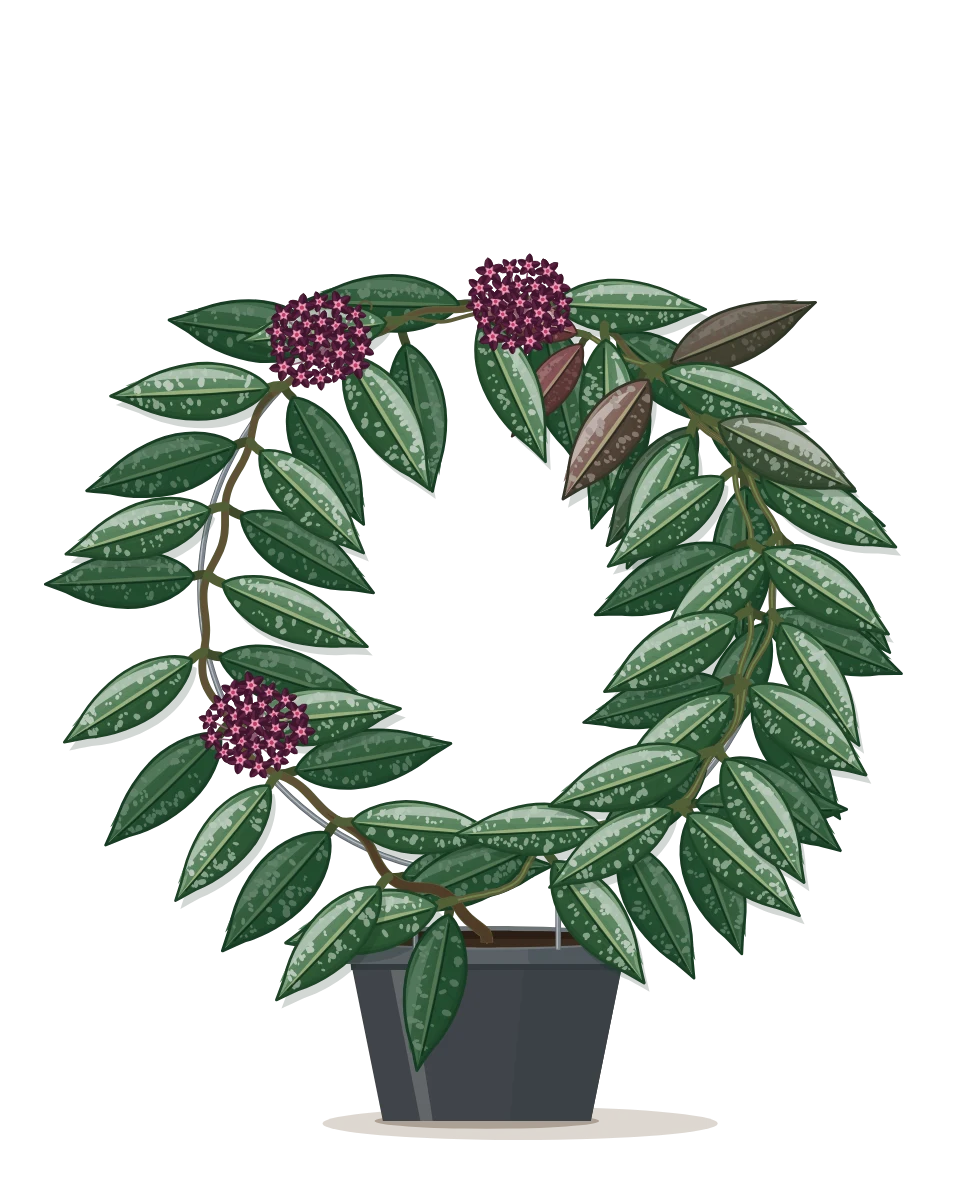
At a glance
- Light
- Bright, indirect light; copes with some direct sun.
- Water
- When the mix is almost dry all the way down. Check the soil first.
- Soil
- A chunky, airy mix that drains in seconds: equal parts orchid bark, peat-free compost and coarse perlite.
- Pot
- A drainage hole is a must; likes to be snug; go up 2 to 5 cm at a time.
- Temperature
- 18 to 27 C; not below 15 C.
- Humidity
- 50 to 70%; ordinary room air is fine.
- Feeding
- Half strength every 4 to 6 weeks in the growing season, none in the rest months.
- Repotting
- Every 2 to 3 years, in spring.
- Rest
- Late autumn to late winter: cooler, drier, unfed.
- Flowers
- Late spring to late summer, sometimes again later, on a settled plant in good light.
- Pets and people
- Cats non-toxic, dogs non-toxic, people not listed.
- Difficulty
- Easy.
Before you waterPush a dry finger as far into the mix as it will go and lift the pot. Dry and light means water; any dampness means wait. Leaves that have gone a little soft and lost their shine are the plant's own signal.
Meet the plant
A vigorous climbing hoya from the Philippines (Kew POWO), with long, narrow, thick and glossy leaves, deep green and usually flecked with silver, on stems that may be purple or grey (NC State Extension). In good light the older leaves take on a silvery-pink sheen (RHS profile). The form sold as 'Splash' has the heaviest flecking; others, such as the dark-flowered 'Royal Hawaiian Purple' and the 'Dragon' forms, are named for their flowers (NC State Extension, Vermont Hoyas, pubicalyx). 'Royal Hawaiian Purple' is a nursery name not described in any source read here. It was once sold as Hoya purpuresfusca (Logee's).
It is one of the easiest and quickest hoyas. NC State rates it rapid and easy, Logee's vigorous and resilient, and Vermont Hoyas says it does well almost anywhere (NC State Extension, Logee's, Vermont Hoyas, pubicalyx). It climbs and needs a support, or it trails from a hanging pot, and in time it can reach a few metres (RHS profile). NC State tags it non-toxic to cats, dogs and horses, and the ASPCA lists its relative the wax plant as non-toxic (NC State Extension, ASPCA); the milky sap can irritate skin, so wear gloves when you cut it (RHS growing guide).
You will usually buy a rooted cutting of a few nodes in a small pot (Logee's). What to expect in a year: long runners that reach out bare and leaf up behind, several new pairs of leaves through spring and summer, and little in winter. It can be slow to mature and flower, up to two years from a cutting (NC State Extension), and the RHS gives two to five years to full maturity (RHS profile).
Light
Bright, filtered light: NC State suggests about six hours of filtered sun, and up to two hours of direct morning sun is fine (NC State Extension). The RHS asks for bright, filtered light indoors, and Logee's grows it in partial sun at a north or east window (RHS profile, Logee's). The cautious path is a spot close to an east or west window with a little gentle sun, moving it into stronger light over a couple of weeks (Clemson HGIC).
This plant shows light on its leaves. A silvery-pink sheen on mature leaves is a sign of enough sun (NC State Extension, RHS profile). Too much direct sun turns the leaves red and can scorch them (NC State Extension, Iowa State Extension). Too little shows as thin, stretched growth, long bare runners, fewer silver flecks on new leaves, and no flowers. Vermont Hoyas finds that the flower colour itself changes with how much sun the plant gets (Vermont Hoyas, pubicalyx).
Water
Check first. Push a dry finger as far into the mix as it will go, and lift the pot: learn what it weighs wet and dry (Vermont Hoyas, watering, Clemson HGIC). Dry all the way down and light means it is time. Any dampness means wait. The leaves help: soft, dull leaves that have lost their shine are asking.
The rule: water thoroughly, until it runs out of the bottom, once the mix is almost dry, then let it dry again (Iowa State Extension). Do not water in sips (Vermont Hoyas, watering). NC State prefers filtered water or rainwater (NC State Extension); room-temperature tap water that has stood a day is what most people use. Sources differ on how dry is dry. NC State says water frequently in the growing season and let the mix dry between waterings, and the RHS says water freely in growth (NC State Extension, RHS profile); Iowa State says let it dry almost completely. This guide takes the drier side, because overwatering brings root rot and leaf drop (NC State Extension), and a fast grower simply comes round to the dry point sooner.
Thirsty: soft, dull, puckered leaves on a dry, light pot, and new growth stalling in summer. A soak brings them back within a day or two. Overwatered: leaves yellowing or dropping while the mix is still wet, or soft leaves on wet mix, which means damaged roots (Iowa State Extension, Clemson HGIC). If the leaves say thirsty and the soil says wet, believe the soil and look at the roots.
How often that lands depends on the pot, the mix, the light and the room. In a chunky mix in bright light in summer it often comes round about once a week, sometimes sooner for a big plant in a small pot; most hoyas need water no more often than about every six days (Vermont Hoyas, watering). In winter the plant rests and wants water very sparingly (UF/IFAS Gardening Solutions); in a cool room that often means two to four weeks between drinks. Dry heated air, though, can empty a pot faster than you expect (Vermont Hoyas, watering). The RHS keeps it just moist in winter (RHS profile); in a cool room err dry. Treat the numbers as a reminder to check, not as the instruction.
Soil and pot
A chunky, fast-draining mix: equal parts orchid bark, peat-free compost and coarse perlite (RHS growing guide, Clemson HGIC). The RHS mixes loam-based compost with sharp sand, bark and charcoal for this species and says it will not tolerate wet soil (RHS profile); hoya growers go chunkier still, mostly perlite and bark with some compost (Vermont Hoyas, medium). Every mix breaks down in time into fine material that holds water, so refresh it every two or three years (Vermont Hoyas, medium).
The pot needs a drainage hole and should be snug. It tolerates tight roots and rarely needs repotting (NC State Extension), and Logee's finds it lives for years in the same pot (Logee's). A pot too large keeps the mix wet (Clemson HGIC). When you do move up, go one size, 2 to 5 cm wider (Vermont Hoyas, repotting). Growers disagree on material: NC State recommends terracotta, while Vermont Hoyas finds bare terracotta dries a chunky mix too fast and uses plastic, which lets you judge the weight. Either works if you check before you water.
Repot in spring, never while the plant is in bud or bloom, and only when roots have filled the pot or the mix has gone fine and soggy (RHS growing guide). Soak it in, then wait until the new mix is nearly dry before watering again: the first two months are when overwatering does the most harm (Vermont Hoyas, repotting). Hold the feed for five or six weeks (RHS growing guide).
Feeding
Lightly. A balanced liquid houseplant or orchid feed at half strength every four to six weeks from spring to early autumn, and nothing in winter (Iowa State Extension). Logee's feeds a balanced feed through the summer growing season (Logee's); NC State gives no feeding advice for this species. Sources disagree about winter: the RHS feeds monthly through autumn and winter and Vermont Hoyas feeds at half strength all year in a greenhouse (RHS growing guide, Vermont Hoyas, watering), while Iowa State stops. This guide stops, the weaker rule. Every few months water through with plain water to wash out salts (RHS growing guide). Nothing for five or six weeks after repotting.
Flowering
Rounded clusters of small star-shaped flowers, 8 to 15 cm across, scented most strongly at night (NC State Extension, RHS profile). The colour varies more than in most hoyas. NC State describes them as dusty pink with pink centres, the RHS as pale red with pink centres, and Logee's as reddish-purple with a mocha scent; Vermont Hoyas grows black and white forms and finds the colour shifts with the light (NC State Extension, RHS profile, Logee's, Vermont Hoyas, pubicalyx). They come from late spring to late summer, and Logee's sees them on and off through the year, encouraged by cooler nights and shorter days (RHS profile, Logee's). They drip a little nectar, so put a cloth under a plant in bloom.
What it takes: a plant with some length of vine, often a year or two old, bright filtered light, a snug pot, and a cooler, unfed winter (NC State Extension, Iowa State Extension). Most hoyas that never bloom are not getting enough light (UF/IFAS Gardening Solutions).
Two things never to do. The flowers grow from spurs, and the same spur flowers again for several years. Do not deadhead, and leave the spur alone when the flowers fall (NC State Extension, Logee's, RHS growing guide). And once buds appear, do not move or turn the plant until the flowers are over; sudden changes make a hoya drop its buds (Iowa State Extension).
When something looks wrong
Look at the soil first; most trouble starts there.
- Puckered, wrinkled or soft leaves. Check the mix. Dry and light: soak it through and the leaves firm up within a day or two. Wet: the roots are damaged; let it dry almost completely and slide it out to look (Iowa State Extension).
- Yellow leaves, leaf drop, on wet mix. Overwatering, a pot too large, or a mix that has broken down (NC State Extension, Clemson HGIC). Stop until nearly dry, check that water runs freely out, and repot into fresh airy mix in a snug pot if the mix is compacted.
- Red or silvery-pink leaves. A silvery-pink sheen is the plant answering good light. Deep red leaves or bleached patches mean too much direct sun; move it back and introduce stronger light gradually (NC State Extension, Clemson HGIC).
- Few flecks, long bare vines. Too little light. A hoya sends a runner out first and leafs it later; wind it onto a support rather than cutting it, and give more light.
- Leaves dropping in winter. Cold, a draught, or dry air from a heater or vent (NC State Extension, RHS growing guide). Check the mix, keep it above 15 C and off cold glass, and raise the humidity.
- No flowers. Light first, then patience, then the spurs: were they cut? Keep the pot snug and give it a cooler, unfed winter (Iowa State Extension, Logee's).
- Buds drop before opening. The plant was moved, or the watering or temperature changed suddenly (Iowa State Extension). Leave it where it is until it has finished.
- Mealybugs. White cottony tufts in the leaf joints (NC State Extension, UF/IFAS Gardening Solutions). Dab each one with a cotton bud in rubbing alcohol, wash with insecticidal soap, repeat weekly, and keep the plant apart until clear (Clemson HGIC).
- Aphids. Small soft insects clustered on new shoots and buds (NC State Extension). Rinse them off, then wipe with insecticidal soap weekly until clear.
- Whitefly. Tiny white flies rising when you touch the plant (NC State Extension, RHS profile). Wash the leaf undersides with insecticidal soap and repeat weekly.
- Scale. Small hard brown bumps with sticky residue (RHS profile). Wipe or scrape them off, then wipe with insecticidal soap or horticultural oil and repeat.
- Spider mites. Pale speckling and fine webbing in dry warm air, often by winter heating (Clemson HGIC). Shower the plant, undersides included, spray with insecticidal soap or neem weekly, and raise the humidity.
- Black mushy base, wilting on wet mix. Root rot. Cut away every dark soft root, repot in fresh, barely damp mix in a snug pot, and take cuttings of healthy vine straight away: a plant this far gone often does not recover (RHS growing guide).
Propagation
By stem cuttings, in spring or early summer, and it roots readily (NC State Extension, RHS profile). Take a piece of mature but not woody vine with two or more nodes and a couple of leaves; wear gloves for the sap. Stand it in water, where it roots in two or three weeks, then pot it up (RHS growing guide); or push it into moist perlite up to the first leaves, keep it warm and humid under a clear cover in bright indirect light, and expect roots in four to six weeks (Vermont Hoyas, propagation). A leaf on its own needs a node attached to make a vine (Iowa State Extension). Pot the rooted cutting into the chunky mix in a small pot and give it the same light and dry spells as its parent. A vine can also be layered: pin a length of stem to a pot of mix beside the plant and cut it free once it has rooted (RHS growing guide).
Grow one for a habit
In Hoya Habit, every habit you keep grows a plant of its own. Check in and it leafs out; let it slide and the plant shows it. Give one of your habits a Hoya pubicalyx.
Sources
- NC State Extension, Hoya pubicalyx, read 2026-10-21
- RHS, Hoya pubicalyx plant profile, read 2026-10-21
- RHS, Hoya growing guide, read 2026-10-21
- Kew, Plants of the World Online, Hoya pubicalyx, read 2026-10-21
- Iowa State University Extension, All About Hoyas, read 2026-10-21
- Clemson HGIC 1460, Indoor Plants, Waxflowers (Hoya), read 2026-10-21
- UF/IFAS Gardening Solutions, Hoya, read 2026-10-21
- Logee's, Hoya pubicalyx, read 2026-10-21
- Vermont Hoyas, Hoya pubicalyx, read 2026-10-21
- Vermont Hoyas, Watering and fertilization, read 2026-10-21
- Vermont Hoyas, Potting medium, read 2026-10-21
- Vermont Hoyas, Potting up or re-potting your Hoya, read 2026-10-21
- Vermont Hoyas, Propagation, read 2026-10-21
- ASPCA, Honey Plant (Hoya carnosa), read 2026-10-21