 Hoya Habit
Care guide
Hoya serpens
Also called The smallest hoya. Family Apocynaceae.
At a glance
- Light
- Bright, indirect light; copes with medium light and some direct sun.
- Water
- When the top half of the mix has dried. Check the soil first.
- Soil
- A chunky, airy mix that drains in seconds but holds a little moisture: equal parts fine orchid bark, peat-free compost and coarse perlite, with a handful of sphagnum moss and charcoal.
- Pot
- A drainage hole is a must; likes to be snug; go up 2 to 3 cm at a time.
- Temperature
- 16 to 24 C; not below 13 C.
- Humidity
- 60 to 80%; dry rooms need help.
- Feeding
- Half strength every 4 to 6 weeks in the growing season, none in the rest months.
- Repotting
- Every 2 to 3 years, in spring.
- Rest
- Late autumn to late winter: cooler, drier, unfed.
- Flowers
- Late spring to summer, sometimes again in autumn, on a settled plant in good light.
- Pets and people
- Cats non-toxic, dogs non-toxic, people not listed.
- Difficulty
- Demanding.
Before you waterPush a dry finger into the mix to the second knuckle and lift the pot. Dry to that depth and noticeably lighter means water; damp means wait. The little leaves tell you too: firm and plump means fine, limp and bendy means thirsty.
Meet the plant
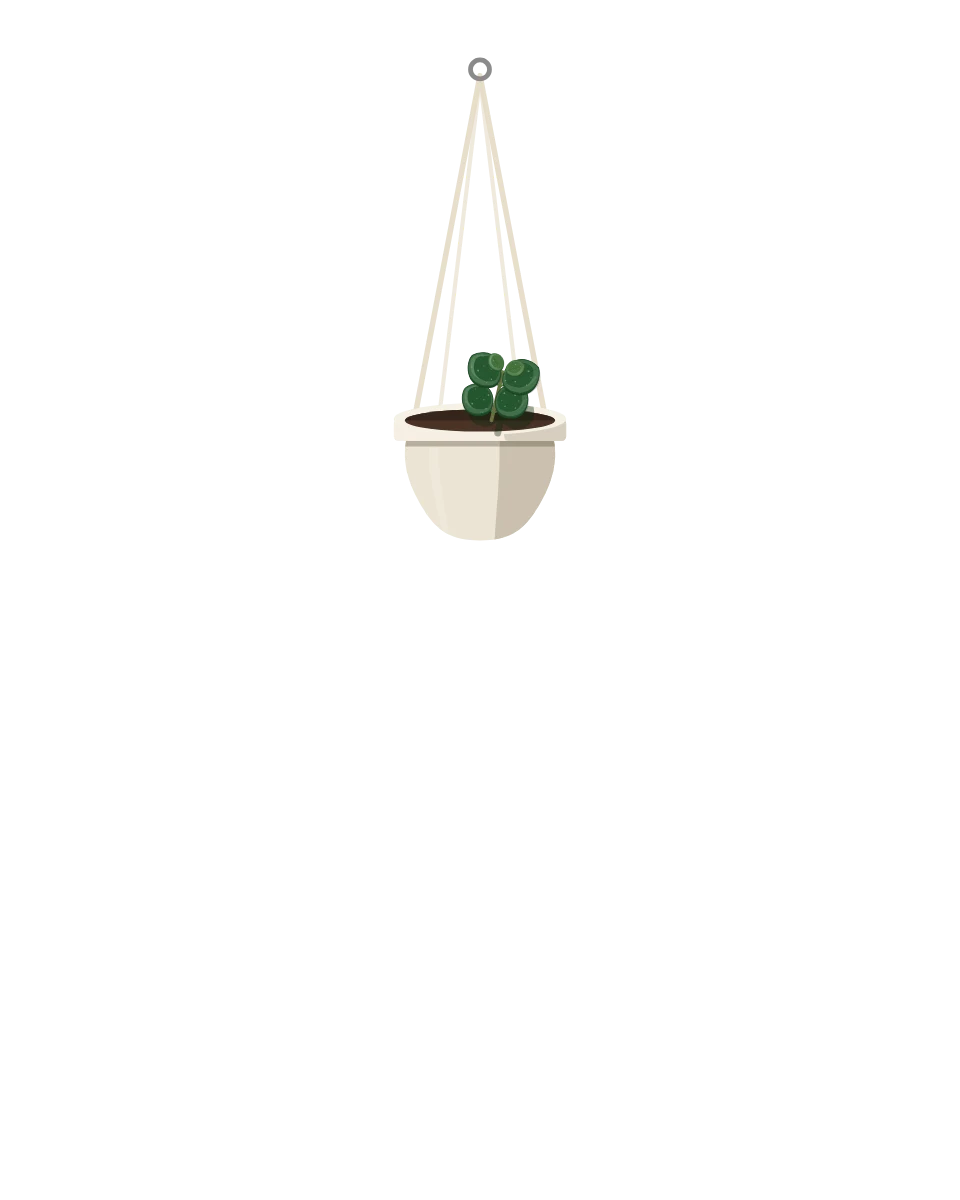
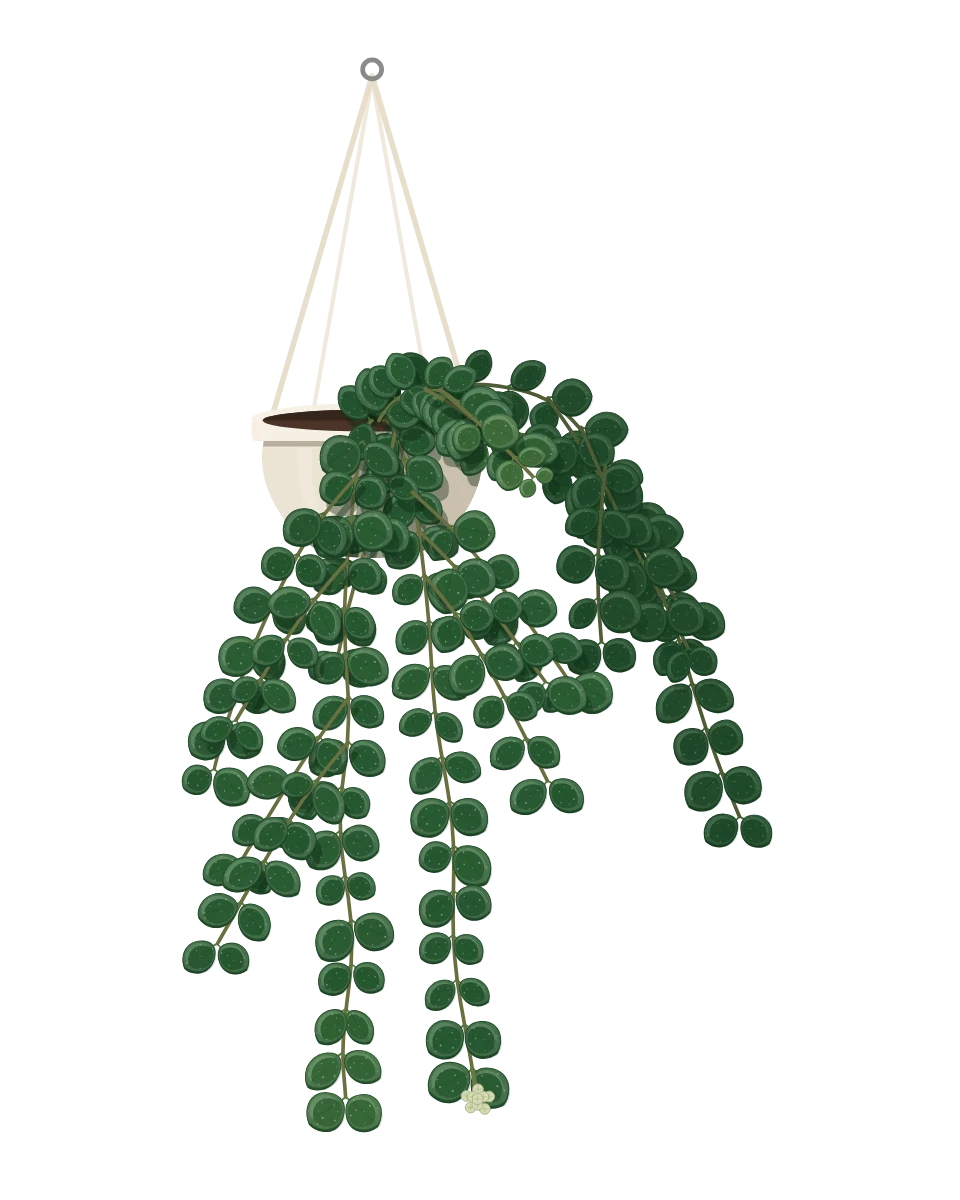
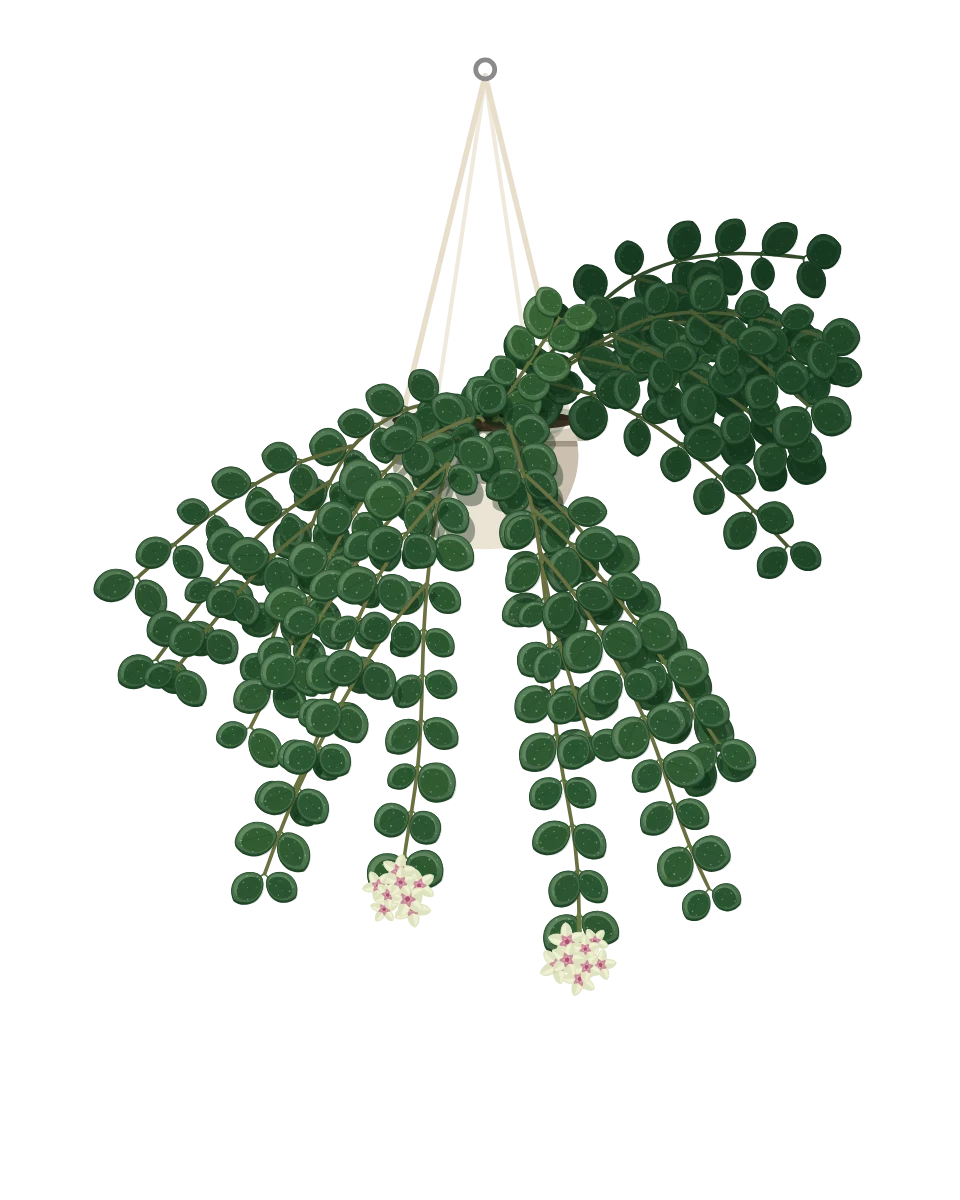
The smallest hoya most people will meet. Wiry stems, no thicker than string, creep and hang from a small pot, branch as they go and root wherever they touch something damp; along them sit pairs of round, plump, slightly cupped leaves barely 1 to 2 cm across, covered in fine velvety hairs and, on most plants in cultivation, lightly flecked with silver (Bhutan Biodiversity Portal, HortFlora, Tesselaar). It does not twine; the stems trail to a metre or so and are usually grown hanging (HortFlora). Growth is slow to moderate, faster in humid air (Araflora, The Plant Company).
It comes from the central and eastern Himalaya, from Nepal through Sikkim and Darjeeling to Bhutan, where it creeps over mossy bark in cool, wet subtropical and laurel forest at around 1400 to 1700 m (Kew POWO, eFlora of India, Bhutan Biodiversity Portal). That is why it is fussy indoors: it wants the humidity of a cloud forest and the temperatures of a cool room, not the warm dry air that suits a wax plant. The most experienced grower source calls it a tough plant to succeed with unless you live where the climate helps, and reports that in cool, dry conditions its leaves yellow and drop, while in heat and humidity it grows and never flowers (Vermont Hoyas). Some nurseries call it easy (Araflora, Tesselaar), others trickier than most (The Plant Company); this guide calls it demanding and says why in each section. It has the genus's milky sap, so wear gloves when you cut it (HortFlora, RHS growing guide). No poison-centre list names this species; the ASPCA lists its relative Hoya carnosa as non-toxic to cats and dogs (ASPCA).
You will usually buy a rooted cutting of a few nodes in a 5 to 9 cm pot (The Plant Company, Tesselaar, Steve's Leaves). What to expect in a year: a few stems lengthening slowly and branching, a pair of leaves at a time, in spring and summer, and little in winter. Flowers usually wait until the second year or later; one nursery says a year or two to flower well, and the plant flowers best once its roots fill the pot (Tesselaar). A plant that only grows is being kept too warm; see Flowering.
Light
Bright, filtered light: close to an east window, or a little back from a brighter one behind a sheer curtain, with no hot sun on the leaves (Steve's Leaves, Tesselaar). Gentle morning sun or dappled light is fine; hot afternoon sun through glass scorches the small leaves and heats the pot (Tesselaar, The Plant Company). This is one of the few hoyas that will sit in medium light without complaint, because in the wild it grows under the forest canopy, but it flowers only with good light. Nothing on light here is specific to the species beyond the nursery pages; the rest is general hoya advice (UF/IFAS Gardening Solutions).
Too much sun shows as bleached leaves and then crisp patches. Too little shows as long thin stems with few leaves and no flowers (Iowa State Extension). Light is the first thing to change when a hoya will not bloom, and for this one the temperature is the second.
Water
Check first. Push a dry finger into the mix to the second knuckle and lift the pot: learn what it weighs wet and dry (Vermont Hoyas, watering, Clemson HGIC). Dry to that depth and noticeably lighter means it is time; damp means wait. The leaves tell you too: plump and firm means fine, limp and bendy means thirsty (The Plant Company).
The rule: water thoroughly, until it runs out of the bottom, once the top half of the mix has dried, then let it dry to that point again. Do not water in sips (Vermont Hoyas, watering), and use room-temperature water. The nurseries disagree on how dry is dry: one says let it dry slightly, one the top 3 cm, one almost dry, and one says never let it dry out for long (Steve's Leaves, Tesselaar, Araflora, The Plant Company). This guide takes the drier side of the middle, the top half, because a soggy pot rots the fine roots of any hoya (Iowa State Extension) and a bone-dry one is what this plant comes from least of all; its leaves are plump and hold a few days of water, no more (Bhutan Biodiversity Portal).
Thirsty: limp, bendy or slightly shrivelled leaves on a dry, light pot. A soak brings them back within a day or two. Overwatered: leaves yellowing or dropping while the mix is still wet, a dark soft patch at the base of a stem, a sour smell (Iowa State Extension, Tesselaar). If the leaves say thirsty and the soil says wet, believe the soil and look at the roots. And if the leaves yellow and drop while the mix is fine, look at the air: cool dry air does the same thing to this plant (Vermont Hoyas).
How often that lands depends on the pot, the mix, the light and the room. In a small plastic pot of chunky mix in bright filtered light in summer it often comes round every six to ten days; one nursery says seven to ten depending on the home, and most hoyas need water no more often than about once a week (The Plant Company, Vermont Hoyas, watering). In winter the plant rests and wants much less, roughly half as often (Tesselaar), though a pot by a radiator in dry heated air can dry faster than you expect, and that dry air is the bigger danger (Vermont Hoyas, watering). The RHS keeps hoyas just moist in winter and the American extension pages say water sparingly; this guide takes the drier side that stops short of bone dry (RHS growing guide, UF/IFAS Gardening Solutions). In a cool room err dry. Treat the numbers as a reminder to check, not as the instruction.
Soil and pot
A chunky, fast-draining mix that still holds a little moisture: equal parts fine orchid bark, peat-free compost and coarse perlite (RHS growing guide, Clemson HGIC), with a handful of chopped sphagnum moss, because in the wild the stems creep over moss and root into it (Bhutan Biodiversity Portal). Hoya growers go chunkier still, mostly perlite and bark (Vermont Hoyas, medium); the nurseries agree on a chunky, well-draining orchid-type mix (Tesselaar, Araflora). Ordinary potting soil on its own stays wet too long. Mixes break down over two or three years into fine material that holds water, so refresh the mix on that rhythm even if the pot stays the same (Vermont Hoyas, medium).
The pot needs a drainage hole and should be small and snug: a shallow pot or a hanging one suits the creeping stems. A hoya flowers best pot-bound and rots in a pot too large (Tesselaar, Clemson HGIC). When you do move up, go only one size, 2 to 3 cm wider (Vermont Hoyas, repotting). Plastic, a glazed pot or a nursery pot in a cachepot lets you judge the weight and keeps the mix from drying too fast; bare terracotta dries a chunky mix faster than the fine roots like (Vermont Hoyas, repotting).
Repot in spring, never while the plant is in bud or bloom, and only when roots have filled the pot or the mix has gone fine and soggy (RHS growing guide, Iowa State Extension); nurseries put that at every two to four years (Araflora, Tesselaar). Water it in lightly so the mix settles around the fine roots, then go back to checking before each watering: the two months after repotting are when overwatering does the most harm (Vermont Hoyas, repotting). Hold the feed for five or six weeks (RHS growing guide).
Feeding
Lightly. A balanced liquid houseplant or orchid feed at half strength every four to six weeks from spring to early autumn, and nothing in winter (Iowa State Extension). This is general hoya advice; the species pages say only to feed with a diluted liquid feed in spring and summer (Tesselaar). Sources disagree: the RHS feeds every couple of weeks in summer and once a month through winter (RHS growing guide), while Iowa State feeds at quarter or half strength and stops for the winter rest (Iowa State Extension). This guide takes the weaker rule. Every few months water through with plain water to wash out salts (RHS growing guide). Nothing for five or six weeks after repotting.
Flowering
The flowers are large for the plant and worth the trouble. Each cluster hangs on a stalk of a few centimetres and holds a handful of stars, each about 1.5 cm across, with the inside of the petals densely furred in white so the whole flower looks fuzzy (Bhutan Biodiversity Portal, HortFlora). Sources describe the colour differently: pale green corolla and corona in the botanical account, soft green with a pink and cream centre in the nurseries (HortFlora, Tesselaar, Araflora); plants vary, and most in cultivation show some pink. The scent is sweet and spicy and comes after dark (Tesselaar, Araflora). In the wild it flowers in late spring and early summer; indoors the nurseries see flowers from spring to autumn (Bhutan Biodiversity Portal, Tesselaar).
What it takes: bright filtered light, high humidity, a snug pot, and above all a cool spell. Vermont Hoyas, which has flowered it several times, puts the ideal in the high teens to low twenties with high humidity, and found that heat with humidity gives lots of growth and no flowers (Vermont Hoyas). So a plant that only grows wants cooler nights and a cooler, unfed winter, and then time: a year or two from a cutting (Tesselaar). The cool spell as a trigger is this guide's reading of that grower's experience, not a tested rule.
Things never to do. The flowers grow from short spurs, and the same spur flowers again year after year; cutting it off is cutting off future flowers (UF/IFAS Gardening Solutions, Iowa State Extension, Tesselaar). Let spent flowers drop by themselves. Leave the new stem tips alone too: handling or cutting them removes the leaves and flowers they would have carried (Tesselaar). And once buds appear, do not move, turn or fuss with the plant until the flowers are over; a moved plant drops its buds, and this one may sulk for a season after a move before it flowers again (Iowa State Extension, Tesselaar).
When something looks wrong
Look at the soil first, then at the air; with this plant the air is often the answer.
- Leaves yellowing and dropping in numbers. Cool dry air, most often in a heated room in winter (Vermont Hoyas); otherwise the pot dried right out, a cold windowsill, a draught or a sudden move. Raise the humidity first: a pebble tray, a group of plants, a cloche or a more humid room. Check the mix and soak it if dry well down. Keep it off cold glass, above 13 C and in one place.
- Limp, bendy or shrivelled leaves. Thirst (The Plant Company), or damaged roots on a wet mix. Dry and light: soak it and the leaves plump up within a day or two. Wet: let it dry to the top half and slide it out to look at the roots (Iowa State Extension).
- Yellow leaves on wet mix. Overwatering, a pot too large, poor drainage or a mix that has broken down (Iowa State Extension, Tesselaar). Stop until the top half is dry, check that water runs freely out, and repot into fresh airy mix in a snug pot if the mix is compacted (Clemson HGIC).
- Brown crisp tips and edges. Dry air (Tesselaar, RHS growing guide), or a mix allowed to dry out again and again. More humidity, a steady rhythm, distance from the radiator.
- Bleached or scorched patches. Hot sun through glass (Tesselaar). Move it back or filter the light, and introduce stronger light over a couple of weeks.
- Long thin stems with few leaves. Too little light, or normal growth: a hoya stem runs ahead and leafs up later (Iowa State Extension). More light, and leave the tips alone (Tesselaar).
- Plenty of growth, never a flower. Too warm all year (Vermont Hoyas), too little light, a pot too large, youth, cut spurs or winter feeding. Cooler nights, a cooler unfed winter, more light, a snug pot, and a year or two (Tesselaar, Iowa State Extension).
- Buds drop, or no flowers after a move. The plant was moved or turned, the mix swung between dry and wet, or a draught caught it (RHS growing guide, Iowa State Extension). Leave it where it is and keep the rhythm steady; after a move, give it a season to settle (Tesselaar).
- Mealybugs. White cottony tufts in the leaf joints and under the leaves (UF/IFAS Gardening Solutions, Clemson HGIC). Dab each one with a cotton bud in rubbing alcohol, wash with insecticidal soap, repeat weekly for several weeks, and keep the plant apart until clear.
- Spider mites. Pale speckling and fine webbing in dry warm air, exactly the air this plant dislikes (Clemson HGIC). Shower the plant, undersides included, every few days, spray with insecticidal soap or neem weekly, and raise the humidity.
- Deformed new leaves, greyish scarring, dying tips. Flat mites, too small to see (Clemson HGIC). A houseplant miticide or predatory mites, and keep it apart from other hoyas.
- Scale. Small hard brown bumps with sticky residue (Iowa State Extension). Wipe or scrape them off, then wipe with insecticidal soap or horticultural oil and repeat.
- Black soft base, stems wilting on wet mix. Root rot. Cut away every dark soft root, repot in fresh, barely damp mix in a snug pot, and take cuttings of healthy stems straight away: a plant this far gone often does not recover (RHS growing guide, Clemson HGIC).
Propagation
By stem cuttings, in spring or early summer, and the plant helps: in the wild the stems root freely at the nodes wherever they touch moss (Bhutan Biodiversity Portal). Take a piece of stem with three or four nodes and its leaves; wear gloves for the sap. Lay or push it into moist perlite or a perlite and sphagnum mix so that two nodes are covered, keep it warm, humid and shaded under a clear bag or cover, and expect roots in four to six weeks (Vermont Hoyas, propagation). It also roots in water in two or three weeks, as hoyas do (RHS growing guide). The simplest way is layering: pin a stem to the surface of the parent's pot, or to a small pot of damp mix beside it, keep it moist and humid, and cut it free once it has rooted (RHS growing guide). Pot rooted cuttings into the chunky mix in a small pot, several together for a fuller plant, and give them the same cool, humid, bright spot as the parent. Keep the humidity up for the first few weeks after potting; a cutting in dry air drops its leaves before it has roots to replace them.
Grow one for a habit
In Hoya Habit, every habit you keep grows a plant of its own. Check in and it leafs out; let it slide and the plant shows it. Give one of your habits a Hoya serpens.
Sources
- Kew, Plants of the World Online, Hoya serpens, read 2026-10-21
- Bhutan Biodiversity Portal, Hoya serpens (after Flora of Bhutan), read 2026-10-21
- eFlora of India, Hoya serpens, read 2026-10-21
- Horticultural Flora of South-eastern Australia (RBG Victoria HortFlora), Hoya serpens, read 2026-10-21
- Clemson HGIC 1460, Indoor Plants, Waxflowers (Hoya), read 2026-10-21
- Vermont Hoyas, Hoya serpens, read 2026-10-21
- Iowa State University Extension, All About Hoyas, read 2026-10-21
- RHS, Hoya growing guide, read 2026-10-21
- UF/IFAS Gardening Solutions, Hoya, read 2026-10-21
- Vermont Hoyas, Watering and fertilization, read 2026-10-21
- Vermont Hoyas, Potting medium, read 2026-10-21
- Vermont Hoyas, Potting up or re-potting your Hoya, read 2026-10-21
- Vermont Hoyas, Propagation, read 2026-10-21
- Tesselaar, Hoya serpens, read 2026-10-21
- Araflora, Hoya serpens, read 2026-10-21
- The Plant Company, Hoya serpens, read 2026-10-21
- Steve's Leaves, Hoya serpens, read 2026-10-21
- ASPCA, Honey Plant (Hoya carnosa), read 2026-10-21